How to Identify Field-Grown Flowers at European Markets
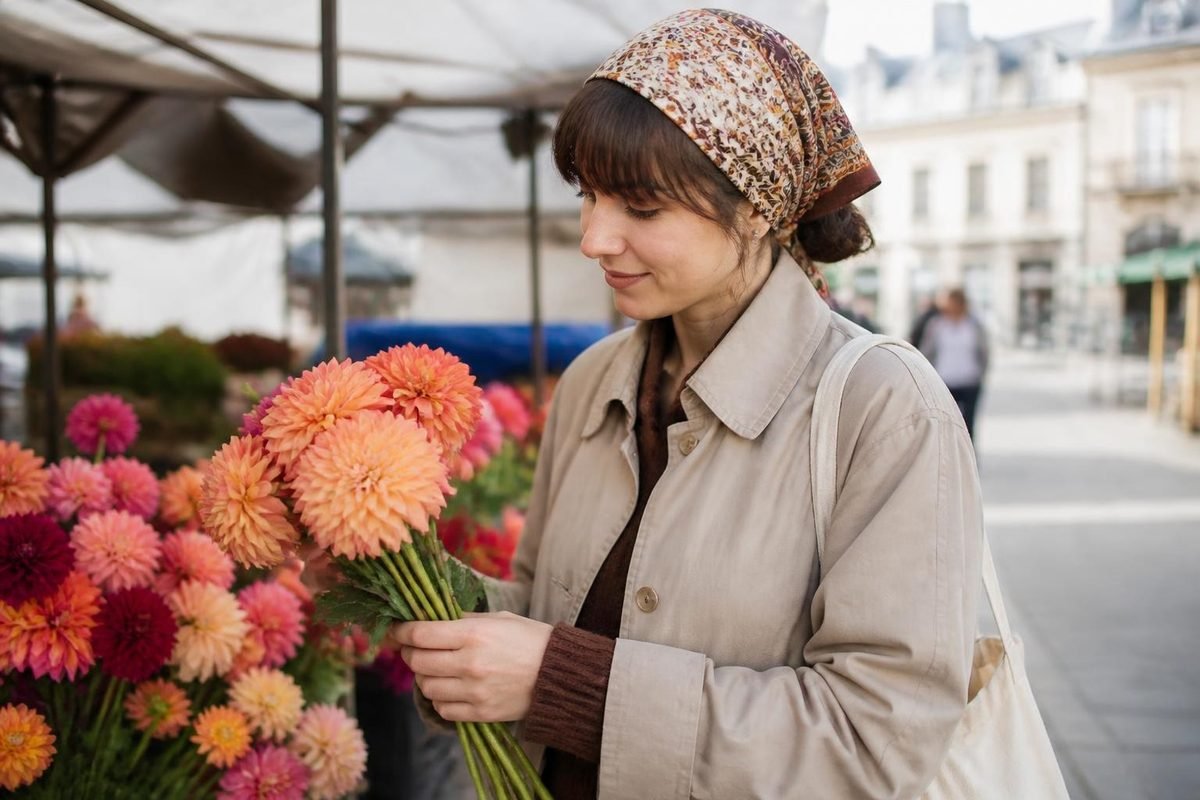
Beginners can look for seasonal flowers, varied stem lengths and small natural imperfections as possible signs of field growing. These clues are not proof, so the most reliable way to find out is to ask the seller where and how the flowers were grown.
Start with the season
Notice which flowers appear in several stalls at once. In much of Europe, tulips and daffodils are associated with spring, while sunflowers and dahlias are more often seen in summer and early autumn. The timing varies with the region and the weather, and market flowers can also be imported or grown under cover.
A flower in season has a better chance of being grown outdoors locally, but its presence alone cannot tell you that. Tulips, for example, may be grown in greenhouses as well as in fields. Think of the season as a useful starting point rather than a test.
It helps to learn a few common flowers at a time. Look closely at the shape of a daisy, the clustered blooms of sweet peas or the layered petals of a dahlia. Once those shapes become familiar, you can spend less time naming every stem and more time asking about its source.
Look closely at the bunch
Field grown bunches may have stems of different lengths, slightly uneven flower heads or leaves marked by weather and insects. Some growers gather several kinds of flowers and foliage into loose, mixed bunches. These details can be appealing, but none guarantees that the flowers grew outdoors.
Equally, a neat bunch is not necessarily greenhouse grown. A grower may sort and trim field flowers carefully before bringing them to market. Look at the whole display rather than judging a single perfect stem or a single bent leaf.
Freshness matters more than perfect symmetry. Check that the stems are standing in clean water and that the petals look firm for their variety. A few open flowers are fine, especially if you want to enjoy the bunch immediately. If you need it to last for an occasion later in the week, ask the seller which blooms are still opening.
Ask the person at the stall
Try a simple question: where were these flowers grown? If the answer is nearby, you can also ask if they were grown outside in a field or under cover. A seller who grew the flowers may be able to tell you directly. Someone reselling them may know the country or region but not the growing conditions.
Signs naming a farm, town or region can give you a useful lead, though a local seller does not always sell only local flowers. If the label is unclear, it is fine to ask. You do not need specialist terms, and it is fine to choose a bunch even when its growing method remains uncertain.
With a little practice, seasonal patterns and familiar stems become easier to notice. Let those observations guide your questions, and take your time choosing flowers you enjoy.
More background: https://taczow.pl/en/jak-zorganizowac-prezent-niespodzianke-dla-kogos-w/
Ends · GARDENNOTES69